
Babylon Previous Residents Source Stack
A Babylon backward address trail uses records with different date ranges and different purposes. Begin with the Babylon parcel identity, then decide whether the question is about a recorded transfer, a dated household clue, or the history of the structure. Suffolk County Clerk records and Town of Babylon assessment material concern land administration. Telephone directories and newspapers may place people in a particular edition. Maps provide Babylon building context. None is a substitute for the others, and none should be stretched into a claim of uninterrupted residence.
| Source | Years It Covers | Where Held | What It Shows |
|---|---|---|---|
| Babylon/Suffolk County Clerk land-record context | 1987-present online imaging context | Suffolk County Clerk Search Records | Recorded deeds, mortgages, liens, and related index events |
| FamilySearch New York Land Records | 1630-1975 collection | FamilySearch account and scanned books | Suffolk grantor/grantee indexes through 1926 and deed books to about 1900 |
| LOC telephone directories | 1892; 1895-1898 holdings | Library of Congress catalog and reading room | Dated Babylon telephone-exchange leads |
| Local newspapers | South Side Signal 1869-1920; Babylon Beacon 1967-2024 | Library, NYS Historic Newspapers, Town Historian | Notices and community context tied to an issue date |
| Babylon Sanborn maps | 1885-1943 | Library of Congress and Babylon Library ProQuest | Building footprint and use, not usually occupants |
For a Babylon address that begins in the online period, establish the tax-map identifier first and work backward through recorded instruments. For an older Babylon address, add FamilySearch land books, local newspapers, telephone holdings, historic maps, and library assistance. A gap is evidence of a gap in the source, not proof that nobody lived there.
Babylon Address Deed Trail
Town of Babylon Assessor property search and Suffolk GIS can provide the Babylon parcel lead used by the Suffolk County Clerk Search Records portal. The Clerk's address form uses house number, street name, and ZIP to return candidate tax-map rows, including district, section, block, and lot. A Babylon condominium is a special pitfall: Clerk instructions say an exact tax-map number is required, so a street-address miss does not establish that there is no record.
The Clerk describes its online land-record imaging context as 1987 to the present. Basic Babylon index access, document images, enhanced access, ordinary copies, and certified copies are distinct routes. Broad searches can also meet the portal's 2,000-result display limit, so narrow by date and the exact parcel key. Older Babylon material may require the Clerk, local repositories, FamilySearch, or an in-person index-book route. Keep the instrument date and recording date separate in every note.
Note: A recorded deed event can identify parties to that instrument, but it does not by itself prove who occupied the Babylon address.
Babylon Title Trail
A chain of title is the sequence of recorded transfers for a parcel. The safest Babylon backward method follows the legal description and tax-map identifier, not only the way an old street address was written. The Babylon Assessor can carry a tax-administration owner field, while the County Clerk holds recorded instruments. A mailing address can differ from the situs, which is the Babylon parcel's physical location. Reconcile those fields rather than silently choosing one as the answer.
- Find the property address and SCTM or DSBL in the Assessor or Suffolk GIS record, retaining the exact zero-padded district, section, block, and lot.
- Search the Clerk's tax-map route and identify the most recent recorded deed that matches the parcel and legal description.
- Read the deed index for the grantee, recording date, document type, liber and page, then preserve the result as an index lead.
- Use the prior grantor as the next historical grantee search, checking name variants, subdivisions, lot assemblies, releases, and condominium records.
- When the online trail reaches its limit, move to FamilySearch, Clerk books, library sources, or staff help and record the unresolved span.
- Grantor
- The party transferring an interest in a recorded instrument.
- Grantee
- The party receiving an interest in that recorded instrument.
- Chain of title
- The connected sequence of recorded transfers for a parcel, checked through documents and legal descriptions.
- Legal description
- The parcel description used in an instrument or tax-map context. It can remain more stable than a historical street label.
Keep a Babylon parcel log with the address as written, municipality or hamlet, SCTM, source, access date, deed liber and page, recording date, grantor, grantee, and any unresolved change. The log does not create proof on its own, but it makes a later comparison with a map, tax record, or older book auditable.
Babylon Previous Residents in Newspapers
For Babylon household-level leads, newspapers can connect an address or surname to a dated event. The Town's 2026 local-history guide lists South Side Signal from 1869-1920, Babylon Leader from 1910-1958, Babylon Eagle from 1928-1963, Babylon Town Leader from 1958-1966, Babylon Town News in 1963-1964 and 1970-1974, Babylon Beacon from 1967-2024, Amityville Record from 1904-2024, Lindenhurst Star from 1927-1958, and Deer Park-Wyandanch News in 1955.
Search both the address and the period-appropriate community name. Babylon, Amityville, Breslau, Lindenhurst, Wyandanch, Deer Park, Copiague, North Babylon, West Babylon, and East Farmingdale can appear differently across sources. The Babylon Library research route provides access to historic newspaper resources, while the Town's Local History Sources Guide helps identify the repository when an online run ends.
A readable issue, with its date and page, is stronger than an OCR match. An obituary, social notice, or local report can add a lead but cannot prove continuous residence, family structure, or a living person's contact details.
Babylon Previous Residents and Sanborn
Sanborn maps are the building part of a Babylon previous-residents trail. The Town guide documents Babylon village editions from 1885, 1890, 1897, 1902, 1908, 1915, 1923, 1929, and 1943. A page can show whether a Babylon structure existed in a stated month or year, along with its footprint, construction material, height, interior features, and fire-protection detail. It usually does not name owners or occupants, and some areas were not mapped.
Read the key and sheet index before comparing an old Babylon address to a present-day parcel. The guide also notes that West Babylon, West Islip, and barrier-island areas can appear in Babylon village map coverage in 1915, 1923, 1929, and 1943. The 1943 Muncie Island destruction is a documented coastal-change clue, not evidence about any present Babylon parcel. Pair a map with an issue-date newspaper, a directory lead, deed, or tax map to label the time slice accurately.
Note: A Sanborn sheet answers whether and how a building was mapped, not who lived inside it.
Babylon Previous Residents by Census
Babylon directories, telephone books, and census schedules are strongest when used as a timed sequence. Federal census years 1900, 1910, 1920, 1930, 1940, 1950, and 1960 can bracket an older Babylon listing under the stated 72-year public-release rule. A Babylon census entry may use a district or community label rather than the postal name that appears today. Keep the source's spelling, then add a modern cross-reference only when supported by official local history.
The Babylon process is simple but deliberate: directory or phone edition to census year, then a newspaper or map check between the two. If a Babylon address number or street label shifts, consult the atlas, Sanborn map, deed legal description, and Town Historian rather than guessing at a renumbering. The research did not locate a single official Babylon street-renumbering chronology, so a plausible match should remain marked as uncertain until a source confirms it.
The historical directory holdings themselves are described on the Babylon city directory page. This address trail uses those volumes as dated evidence without assuming that the collection establishes every household.
Babylon Previous Residents and Vital Records
Vital records can close a Babylon historical lead only when the statutory route and event jurisdiction fit. Outside New York City, New York State Department of Health genealogy access generally begins after 75 years for births when the person is known deceased, 50 years for deaths, and 50 years for marriages when both spouses are known deceased. Direct-line descendants can seek shorter periods with required relationship and death proof. State registration outside New York City began in 1881, so an earlier Babylon event may call for church, cemetery, newspaper, town, county, or family sources.
New York State Department of Health genealogy instructions set out the 75/50/50 thresholds and application path used for historical Babylon research.
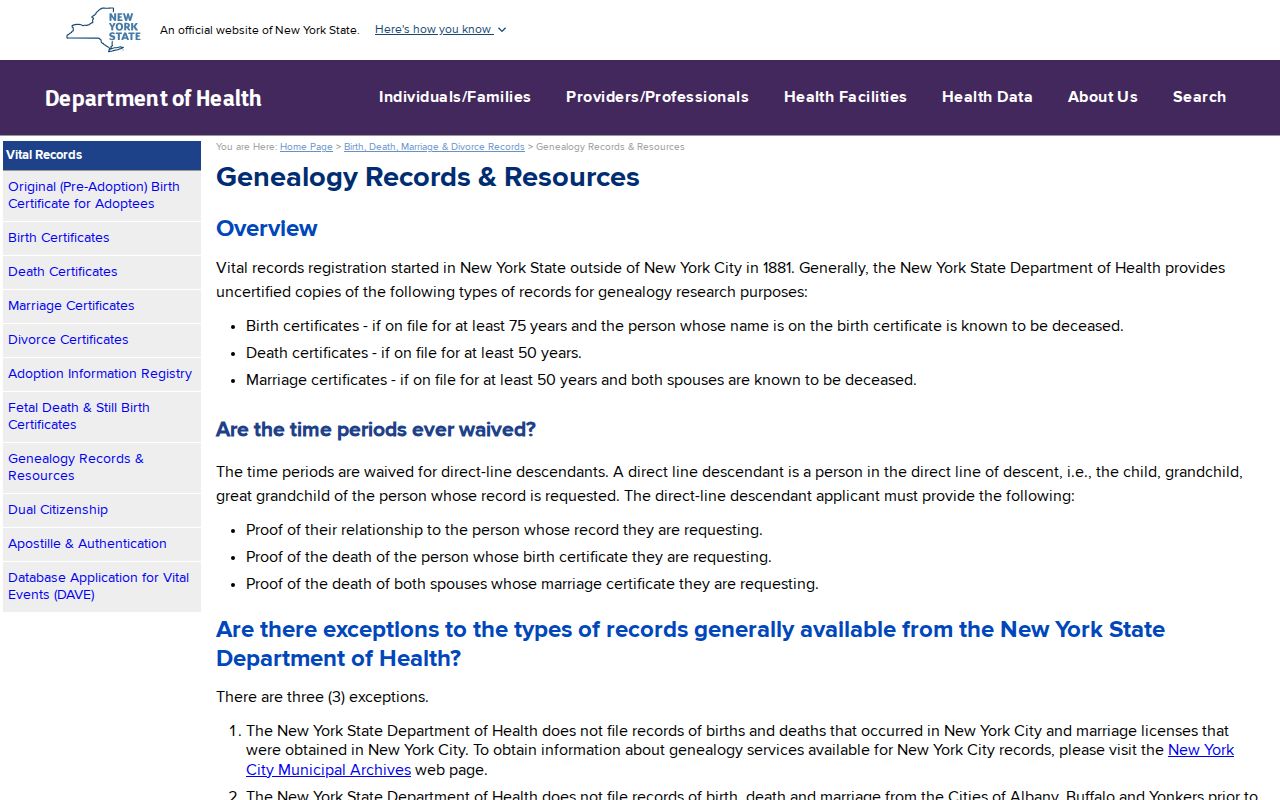
The official instructions support a dated genealogy inquiry; they do not turn a newspaper mention or directory line into eligibility for a certified copy.
The Town Clerk is a local registrar route for qualifying Babylon events. It can issue a marriage certificate when the license was obtained in Babylon and a death record when the death was pronounced in Babylon. A Babylon burial, residence, hospital, or funeral location alone does not substitute for the registrar rule. Use the Town Clerk or DOH instructions for the exact Babylon transaction and current requirements.
Babylon's 1872 Records Story
Town of Babylon records begin with Babylon's 1872 incorporation. Early public business took place in hotels and private homes, while Clerk records were kept in a rented office. The Town describes Babylon municipal Clerk records and minutes as 1872-present, and Old Town Hall was rededicated as a History Museum in 2010. That story explains why a Babylon house-history question may move among municipal records, local history files, maps, newspapers, and county land instruments rather than staying in one portal.
There is an important limit to the story. The reviewed sources do not identify a courthouse fire or a complete local records loss. Nor do they verify the first or final Babylon printed city-directory year. Do not manufacture a missing era. Record the repository, access date, and gap, then ask the library or Town Historian for the specific volume, index, or file needed.
Babylon Previous Residents and Deed Alerts
A Babylon historic transfer trail can also reveal why a property owner wants to watch new filings. Suffolk County's Homeowners Watch List, called HOWL, is a free email-alert service for a registered property when a deed or other land record is filed. It is useful for monitoring a Babylon filing event, but it is not a title opinion, a guarantee, or a source for identifying past residents.
Suffolk County's HOWL information page explains the official property-filing alert and its timing cautions.
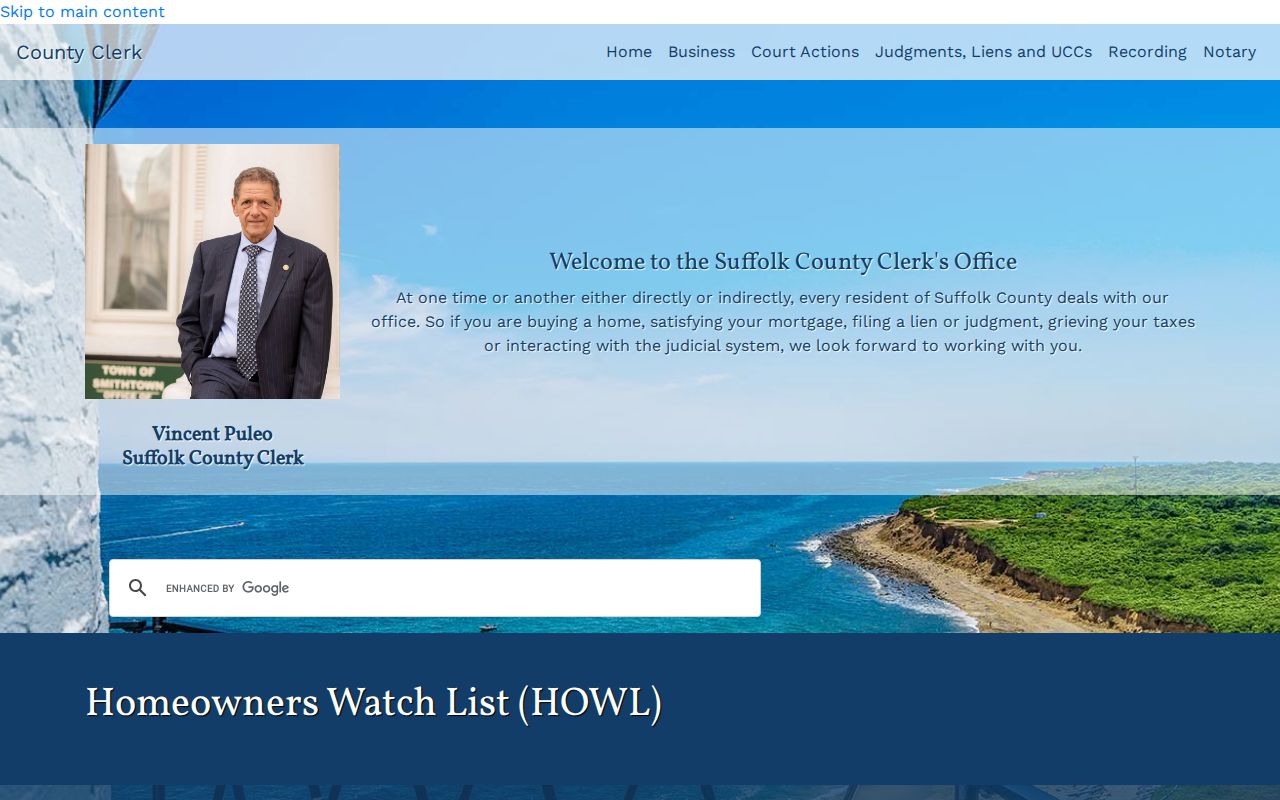
The County cautions that a new deed may take 8-10 weeks to appear and that an alert is not a promise of timely notice or liability protection.
Unexpected deed-copy letters and forged-transfer concerns should be checked against the Clerk's official copy route, not an unsolicited link or payment request. Preserve the notice, compare it with the Clerk index, and use the County Clerk or the New York Attorney General's official deed-theft route for a concern that needs reporting.
Safe Babylon Previous Residents Research
Babylon past-resident research is for family history, house history, local history, and a careful understanding of how an address changed. It should not be used to track a living person or expose a protected Babylon location. New York's Address Confidentiality Program and confidential-voter procedures can lawfully withhold an actual address. Babylon property records, vital files, voter materials, and maps have separate privacy rules, even when another related record is available.
Use only the amount of Babylon information needed for the historical question. Do not publish a full birth date, signature, protected address, or unnecessary phone and email detail from a source. A public index can become harmful when combined with another record, which is why a careful trail records sources and dates without assembling a profile of a living person.